Monday Minute: How to begin a story on stage
Transcript
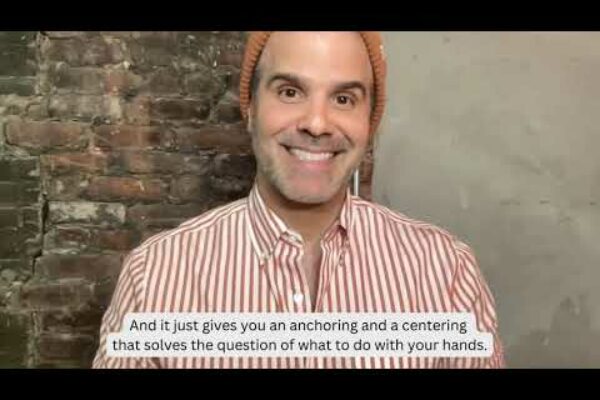
It is time for your Fearless Monday Minute. How do I begin to tell a story…dot dot dot? Well, there’s a very clear way to begin to tell the story which is “once upon a time” to begin your story at the top, the very beginning of the narrative. But a virtuosic and accomplished storyteller knows that there are ways to play with your audience, and seeding different parts of the story along the plot helps to create that sense of tension, and dynamism with an audience. So three spaces to play with is: one, before the inciting incident, before the moment that something shifts which is why you’re telling me a story. The second is right before the climax, so the major turning point of the narrative, and the last is at the very end, start at the very end of the story, and then backtrack and then take me on the story journey story train. And think of that the next time you have to tell a story.
Once upon a time, a fearless thought leader stood on the biggest stage of their career and told a story. Especially when you are crafting your signature talk or preparing for a keynote, sharing your story is an incredible way to bring your audience into the moment and along for the ride.
In the words of Julie Andrews, let’s start from the very beginning, it’s a very good place to start. But must we always start at the beginning?
Storytelling is at the heart of connecting with your audience
Storytelling brings emotional depth to your speech. It shows your experience and brings the audience into your talk, rather than being talked at. Emotional highs, lows, joy, fear. Stories encourage us to workout our empathy muscle and provide another layer of context to the information you’re sharing.
But does that mean you have to tell your story in chronological order?
3 ways to begin a story in your next talk
An accomplished storyteller knows that there are ways to play with your audience. Will Storr, in his groundbreaking book The Science of Storytelling, explains that we are psychologically hard-wired to pay attention to change or the threat of imminent change. This is why page turners work so well. Why clickbait works (as much as we may hate it). Most people will begin with the exposition – a barrage of details where you set the scene, introduce the characters, and give some context for the conflict that will be at the center of the story. But one of the biggest mistakes I see storytellers make is that they drown in unnecessary details at the beginning. So here are three different ways to begin sharing your story:
Start at the inciting incident.
The inciting incident is the event that kicks off your story. I had a client once call it the “oopsie doodle”. The phone rings. There’s an unexpected knock on the door. You make a wrong turn. Something unexpected happens, which is why you’re telling us a story. Since the inciting incident occurs very early in your story you can very easily begin with the event and then once you hook us, you then fill in the details with the context we’ll need for the rest of the story.
Start in the middle (just before the climax)
Another option is to begin just before the big turning point of the story, or the climax. It may seem counterintuitive, but opening right before the biggest, most important part of your story grabs your audience’s attention. And keeps them intrigued on how the rest of the story unfolds. This is a tactic used in television all the time. And we’re seeing it more and more often in online content. Don’t give the turning point away though. Get us right to the edge of the reveal and then go back to the beginning. It’s a tease. It’s a seduction.
Start at the end (and bring them on the journey)
Tell the end of your story first. White Lotus has done this beautifully as a series. In Season 1, the show begins with one of the main characters at the airport. As he looks out of the window, we see a casket being led into a plane. We then flashback and all we can think about is that someone is dead and who is it going to be.
What you would do is tell us the end of the story with some hook or question that is unresolved. Then flashback and take us to the beginning of the story in chronological order. Let them go on the journey with you as they wonder how on earth you’re going to get to that conclusion. It’s a popular storytelling technique for a reason.
Bringing the audience into the moment with present tense
One of the biggest pieces of advice I give my clients is to tell your story in the present tense. Telling a story about what happened, in the past tense, is the obvious way to share your story. What is thrilling to me about the present tense is that it creates an immediacy and tension . . . like the story is unfolding before us. It is a varsity storytelling move and will take some practice to ensure the tense is consistent.
Proceed with caution. If you are sharing a story where there is intense trauma or violence you want to share it responsibly. The immediacy of the present tense could cause you to retrigger or retraumatize yourself or worse an audience member. In that case the past tense is a completely valid option – to keep the past in the past.
Helpful resources to craft your talk content
Storytelling is one of the most powerful ways to connect with your audience, no matter how big or small. Now we have some ideas of how to start, here are some other resources you may find helpful when crafting the content for your next speech.
- Mastering the rule of three in storytelling
- Transition lines: the tool to keep your audience hooked when you’re on stage
- Don’t be a trauma dumper: vulnerability vs oversharing in public speaking
- Tools of trust: 5 tools of storytelling to use in your next speech
Ready to step into the spotlight and slay the stage? We have workshops and courses for everyone from public speaking beginners to folks ready to storm the world stage with their signature talk.