
Reflections: Grief and the tools of Thought Leadership
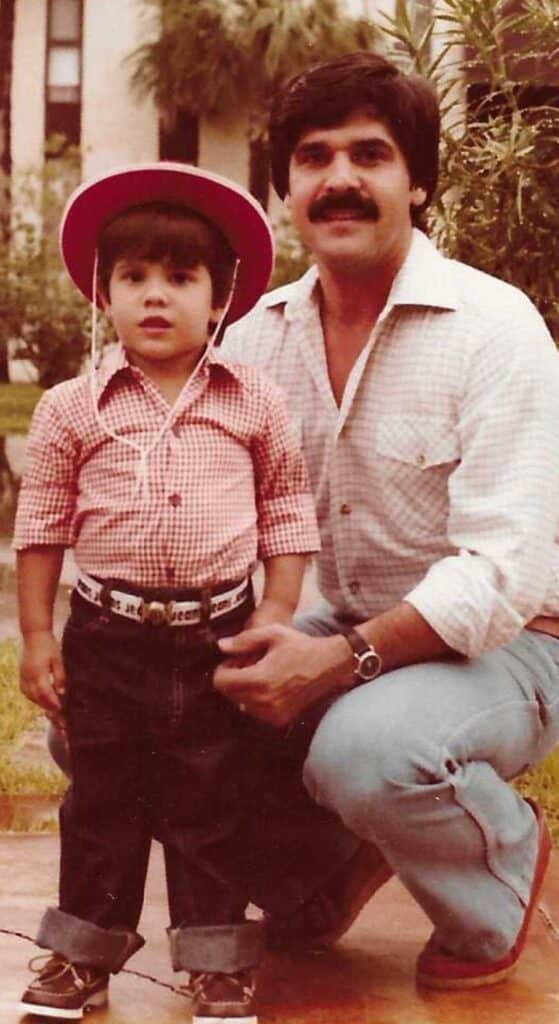
On August 2nd, my father, Felix Eduardo Placer, passed away. It was sudden, though not entirely unexpected. And in the shock and disorientation of those first hours, I reached for the only anchor I knew: words.
A whisper surfaced inside me: “He gave you words. The written. The spoken. The sung.”
And so, in the days that followed, I used words—and storytelling—as my way to move, as we say, from the wound to the scar.
Grief vs. Dolor
In English we speak of grief—the sadness of loss. In Spanish we speak of dolor—pain. In English, you might say: I accompany you in your grief. In Spanish: Te acompaño en tu dolor.
Both are true. Both are needed. And I found the crafting and ultimate sharing of the eulogy to be a profound experience that kicked off my healing journey.
Storytelling as a Way Through
When I knew I would deliver my father’s eulogy (scroll down for audio), I fell back on the same process I’ve taught and practiced for 20 years. Here’s what helped me:
- Idea Dump – I began writing in my notes app and on paper. Not for perfection, just to get the swirl of images and memories out of my head.
- Micro-Test Stories – In casual conversations with friends and colleagues, I shard and tested fragments aloud. This helped me find rhythm, edit details, and notice what resonated.
- Build a Structure – My first draft was “A Eulogy in Five Acts (with a prologue and an epilogue, because I’m a little extra).” I killed some darlings and pared it down: a prologue, three stories, and an epilogue with a core central theme.
- Find a core theme– It’s impossible to share everything. As an act of service to yourself and the people listening, pick a central message and then ensure that everything you share is aligned with that central idea.
- Practice. Practice. Practice. OUT LOUD – By the time I stitched the speech together, I had already practiced the stories individually. The night before, I ran the full draft three times. In the morning, I warmed up my body and voice and rehearsed it again several times. You want the talk in your body, not your head.
- Don’t memorize – At the lectern, I used a speaker’s outline (phrases, not full sentences). I didn’t want to read and the time constraints made memorization impossible. I wanted to speak extemporaneously, allowing my words to channel through me and reach those gathered.
- Use Poetry or Song – In Shakespeare, when the emotion is too great, the characters break out into poetry. In Musical Theatre, characters break out into song. If you feel inspired and it’s relevant to you, use SNIPPETS of poems or lyrics from songs to help you meet the emotion of the moment. Avoid reading the whole poem or song – this is seasoning, not the main event.
The Shape of My Eulogy
- Core Theme: My father gifted us with the power of his presence as an expression of his love. Blessed that my siblings and I were able to offer him that gift in the moments before he passed. Grateful for the presence that the attendees at his memorial mass have given me and my family as we move through the waves of grief.
- Prologue: A snippet of my father’s favorite poem from the Rubáiyát of Omar Khayyám and the whisper—words, he gave me words.
- Act I: CHILDHOOD Me trying to meet him in his passions (football, baseball) and the gift of being released to pursue my own.
- Act II: ADOLESCENCE Him meeting me in mine (gymnastics, swimming, activism) and the trust he gave me at 16: I don’t worry about you.
- Act III: ADULTHOOD After the tension of coming out how we met each other as adults (our Funny Girl duet across the Hudson River and Manhattan, and three examples of how we enjoyed time together – culminating in the final act of presence as my siblings and I said goodbye to him moments before he passed.
- Epilogue: His final yearning for adventure, woven with Tennyson’s Ulysses, his legacy of presence, and Van Morrison’s Into the Mystic.
Why Share This?
Because one day, you too may be asked to give voice to the unspeakable. And in that moment, the tools that I have used to coach thought leadership—the same ones we use for keynotes, pitches, and TEDx talk.
Writing. Storytelling. Testing. Structuring. Practicing. Delivering.
These became anchors to give voice, under time constraints, and waves of emotion to show up fully present and powerful in a moment that mattered to me, to my family, and most importantly to honor the memory and legacy of my father.
This practice carried me through the most difficult speech I’ve ever given. And I share it here in case one day it might serve you too.
If you would like to listen to the speech I gave, here is the link to the audio.


